Examples
Real pipelines you can clone, run, and bend to your data. Each example is production-wired — one source, a declarative flow, a live target. Pick the one closest to what you need and change the parts that don't fit.
Semantic Search
Embed your documents, store the vectors, and answer by meaning.
 Open example →
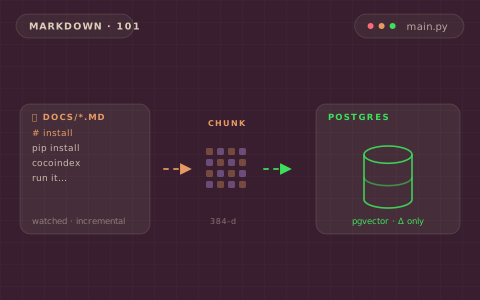
Semantic Search 101
Chunk Markdown files, embed each chunk, store the vectors in Postgres, and search them in plain English. The simplest end-to-end vector index — the best place to start.
 Open example →
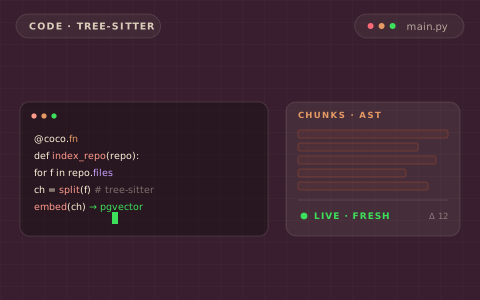
Index Your Codebase
Walk a repo, split by syntax with Tree-sitter, embed, and query your codebase in English. A live vector index for AI coding agents, in ~100 lines.
 Open example →
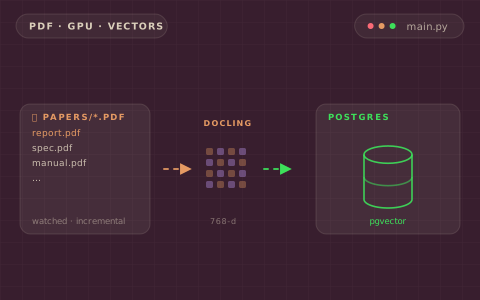
Semantic Search over PDFs
Convert local PDFs to Markdown with docling on a GPU runner, chunk, embed, and store the vectors in Postgres — then query in natural language. A vector index over your documents.
 Open example →
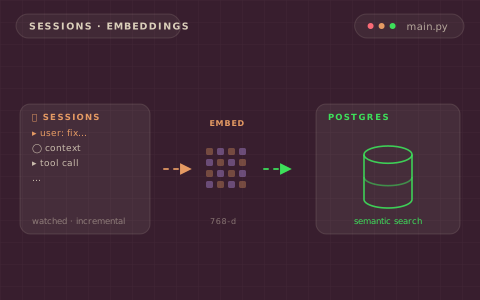
Search Your AI Coding Sessions
Index AI coding sessions captured by Entire — transcripts, prompts, and context summaries — into Postgres for natural-language semantic search.
 Open example →
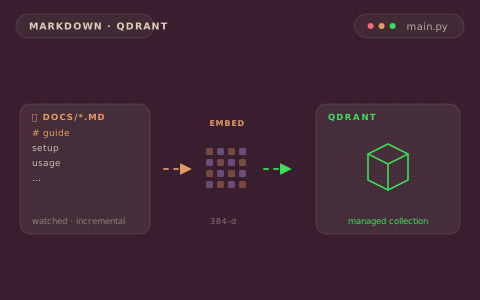
Semantic Search with Qdrant
The Semantic Search 101 pipeline pointed at Qdrant — chunk Markdown, embed locally, and upsert the vectors into a managed Qdrant collection.
 Open example →
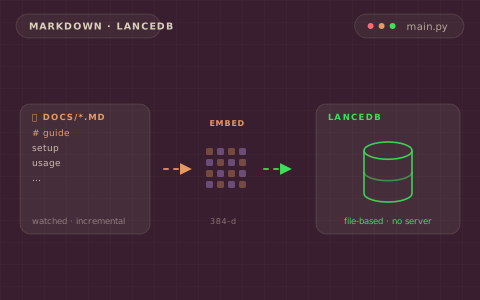
Semantic Search with LanceDB
The Semantic Search 101 pipeline with LanceDB as the target — chunk Markdown, embed each chunk, and store the vectors in an embedded, file-based store with no server to run.
 Open example →
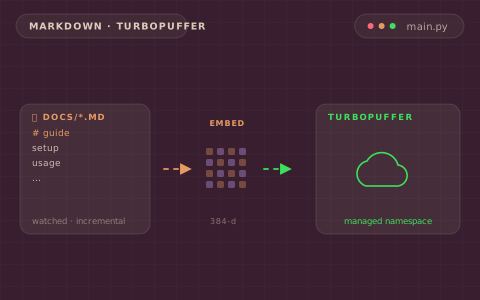
Semantic Search with Turbopuffer
Chunk Markdown, embed each chunk, and upsert the vectors into a managed Turbopuffer namespace — the Semantic Search 101 pipeline pointed at a serverless vector store.
 Open example →
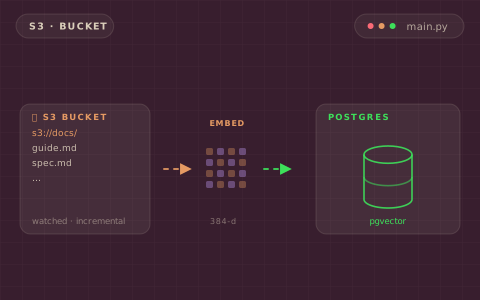
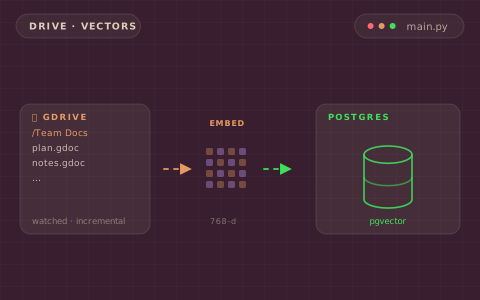
Embed Markdown from Amazon S3
The Semantic Search 101 pipeline with an Amazon S3 bucket as the source instead of a local folder.
 Open example →
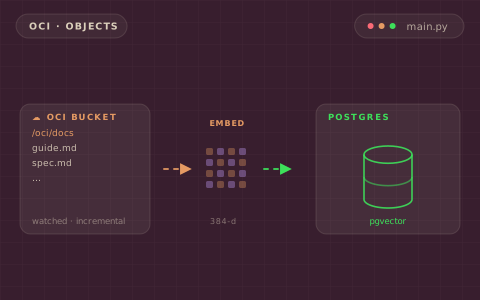
Semantic Search over Google Drive
The Semantic Search 101 pipeline with Google Drive as the source — chunk and embed every document and store the vectors in Postgres with pgvector.
 Open example →
Embed OCI Object Storage
Chunk and embed Markdown objects from an Oracle Cloud (OCI) Object Storage bucket into Postgres/pgvector, with optional live updates via OCI Streaming.
 Open example →
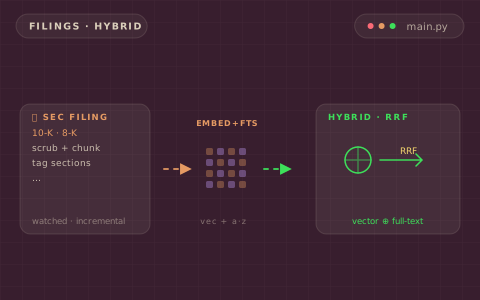
SEC Filing Hybrid Search
Scrub, chunk, embed, and tag multi-format SEC filings into Apache Doris with both a vector and a full-text index — then retrieve with hybrid (semantic + keyword) RRF search.
Multimodal Search
Search images, PDFs, slides, and faces by meaning — the same vector index, a different encoder.
 Open example →
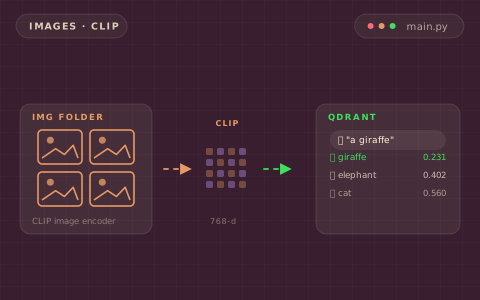
Search Images by Text
Embed images with CLIP, store the vectors in Qdrant, and search your photos in natural language through a FastAPI + React app — live updates, no tags or captions.
 Open example →
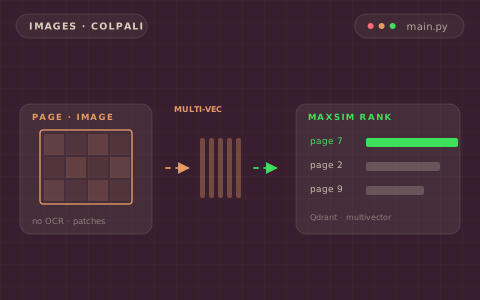
Image Search with ColPali
Embed images and queries into multi-vector ColPali bags of patch vectors, store them in Qdrant, and rank with late-interaction MaxSim through a FastAPI app.
 Open example →
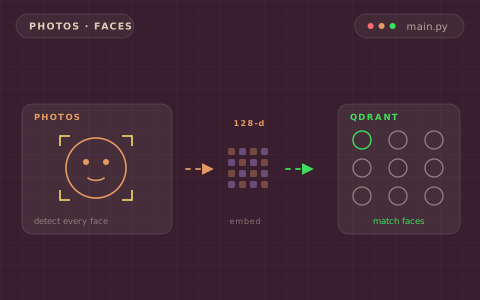
Build Your Own Face Search
Detect every face in a folder of photos, embed each into a 128-d vector with face_recognition (dlib), and index them in Qdrant — then search your photos by face.
 Open example →
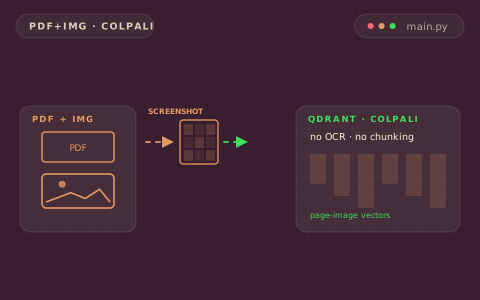
Multi-format Visual Search
Index PDFs and images as page screenshots with the ColPali multi-vector model — no OCR, no chunking — into Qdrant with MaxSim, and search the visual content by text.
 Open example →
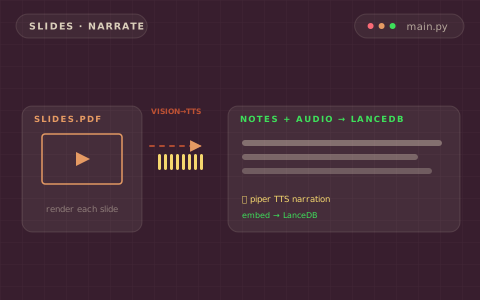
Slides to Narrated Search
Render each slide, write speaker notes with a vision LLM, narrate them with Pocket TTS locally on the CPU, and embed the notes into LanceDB — search a deck by meaning and play back the narration.
Structured Extraction
LLM-extract typed, structured data from code and documents — with instructor, BAML, or DSPy.
 Open example →
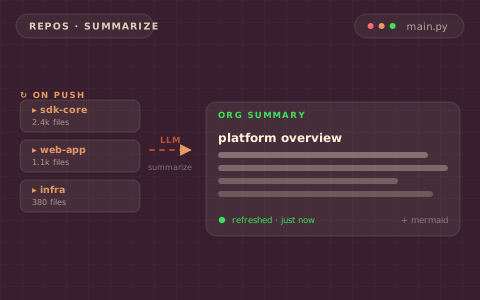
Multi-codebase Summarization
Walk many Python repos, LLM-extract a typed summary per file — classes, functions, Mermaid call graphs — and aggregate into an always-fresh wiki page per project. The flagship v1 walkthrough.
 Open example →
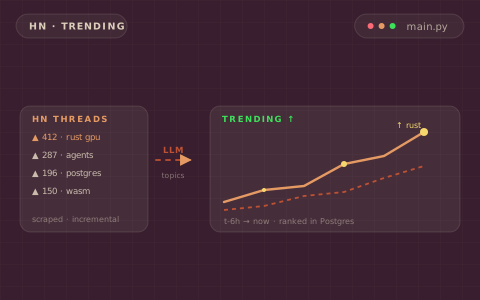
Trending Topics from HackerNews
Scrape recent HackerNews threads and comments via the Algolia HN API, extract topics with an LLM, and rank what is trending in Postgres.
 Open example →
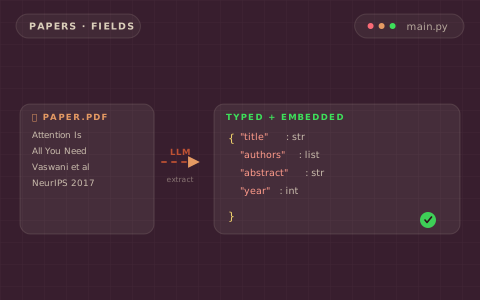
Index Academic Papers
LLM-extract title, authors, and abstract from academic PDFs into typed rows, embed them, and store it all in Postgres with pgvector.
 Open example →
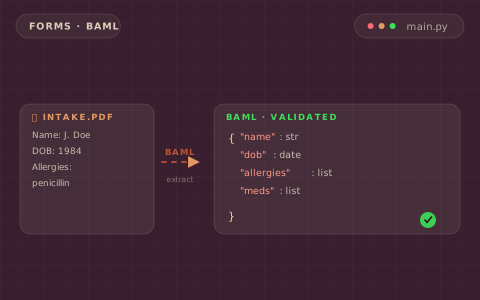
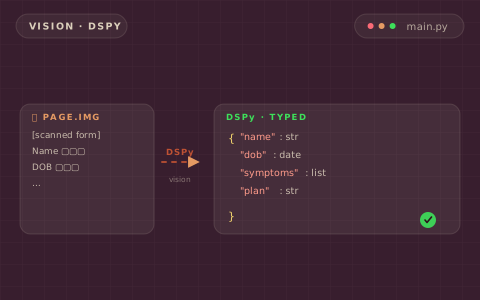
Patient Intake Forms to Typed JSON with BAML
Extract schema-validated patient records from intake-form PDFs with one type-safe BAML Gemini-vision call per file, writing a JSON file per form.
 Open example →
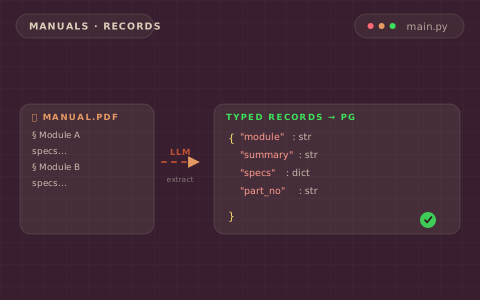
Patient Intake Forms to Typed JSON with DSPy
Render patient intake PDFs to images and extract a typed Patient with a DSPy ChainOfThought vision module on Gemini, writing one validated JSON file per form.
 Open example →
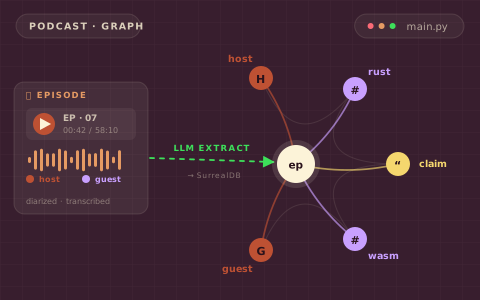
Manuals to Structured Data
Convert PDF manuals to Markdown with docling, LLM-extract a typed module summary (classes, methods, arguments), and store one structured record per manual in Postgres.
Knowledge Graphs
Give agents a persistent, graph-shaped memory from conversations, meetings, products.
 Open example →
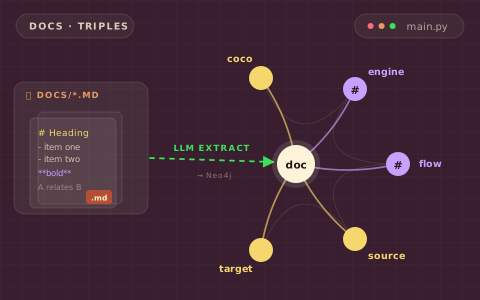
Podcasts → Knowledge Graph
Turn YouTube podcasts into a queryable knowledge graph — diarized transcription, two-step LLM extraction, embedding-based entity resolution, and a SurrealDB graph.
 Open example →
Docs → Knowledge Graph
Turn a folder of Markdown docs into a Neo4j concept graph — LLM-extracted (subject, predicate, object) triples that stay in sync as the docs change.
 Open example →
Meeting Notes → Knowledge Graph
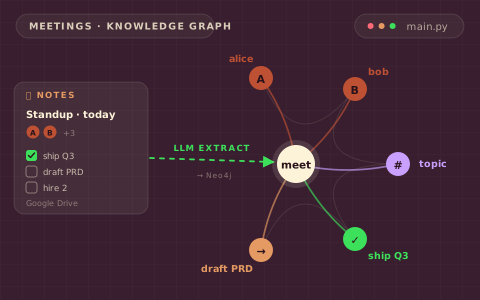
Turn Google Drive meeting notes into a Neo4j knowledge graph — LLM extraction of organizers, attendees, and tasks, plus embedding-based person entity resolution, kept in sync as notes change.
 Open example →
Product Recommendation Graph
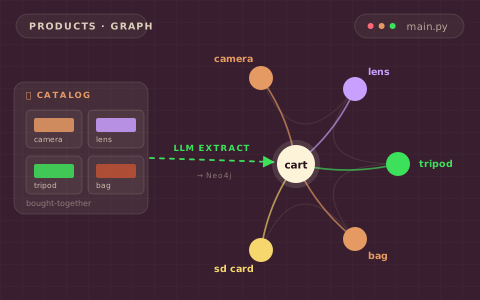
LLM-extract what each product is and what pairs with it from product docs, into a Neo4j graph of products and taxonomies that powers "customers also bought" recommendations.
Ingest & Transform
Bring your own source, target, or parser — move and reshape data with the same declarative flow.
 Open example →
PDF → Markdown
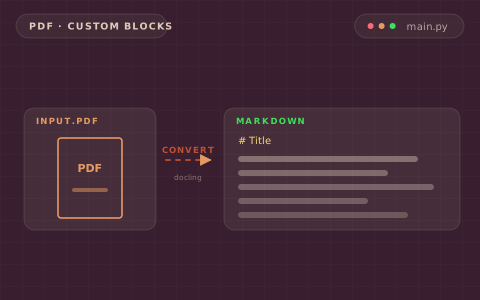
Incremental PDF → Markdown conversion pipeline. Custom building blocks over a folder of PDFs.
 Open example →
CSV → Kafka
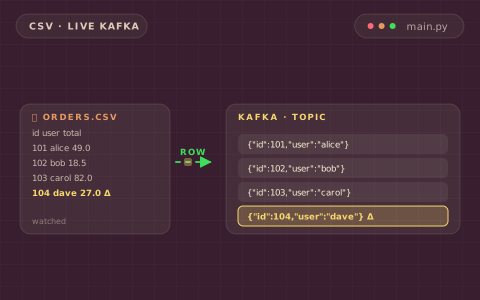
Watch a folder of CSV files and publish each row as a JSON message to a Kafka topic — declarative target states, only-changed-rows produces, and live mode in ~60 lines.
 Open example →
Audio to Text
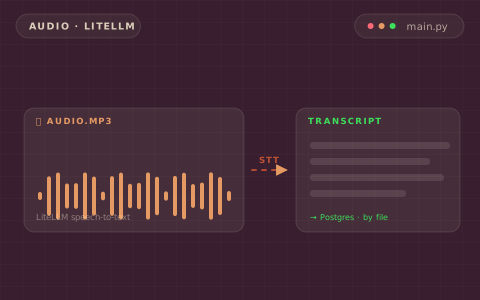
Transcribe local audio files with a LiteLLM speech-to-text model and store one transcript row per file in Postgres, keyed by filename.
 Open example →
Postgres as a Source
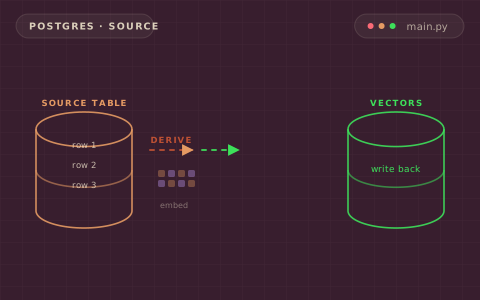
Read rows from an existing Postgres table, derive fields, embed each row, and write the vectors back to Postgres with pgvector.
 Open example →
Transform a Folder of Files
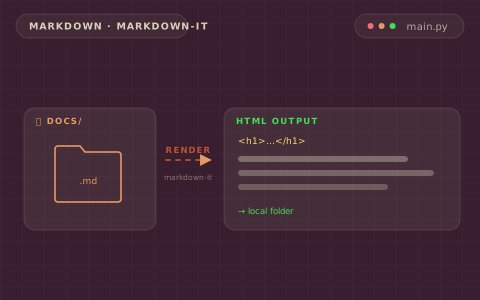
The smallest end-to-end CocoIndex pipeline — watch a folder of Markdown, render each file to HTML, and write the outputs to a local folder incrementally.
 Open example →
Consume Kafka into LanceDB
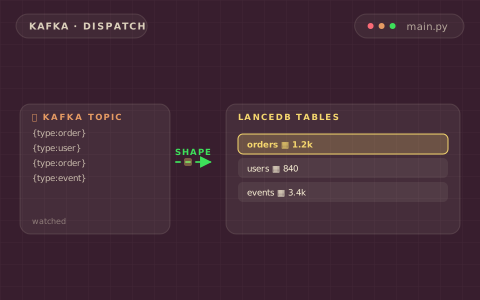
Consume JSON messages off a Kafka topic and dispatch each one — by its shape — into the matching LanceDB table.
Can't find the shape you need?
Clone the closest example, swap the source or the target, and keep the rest. Or request a new example — we ship the ones developers ask for.